Every product described, not just the bestsellers.
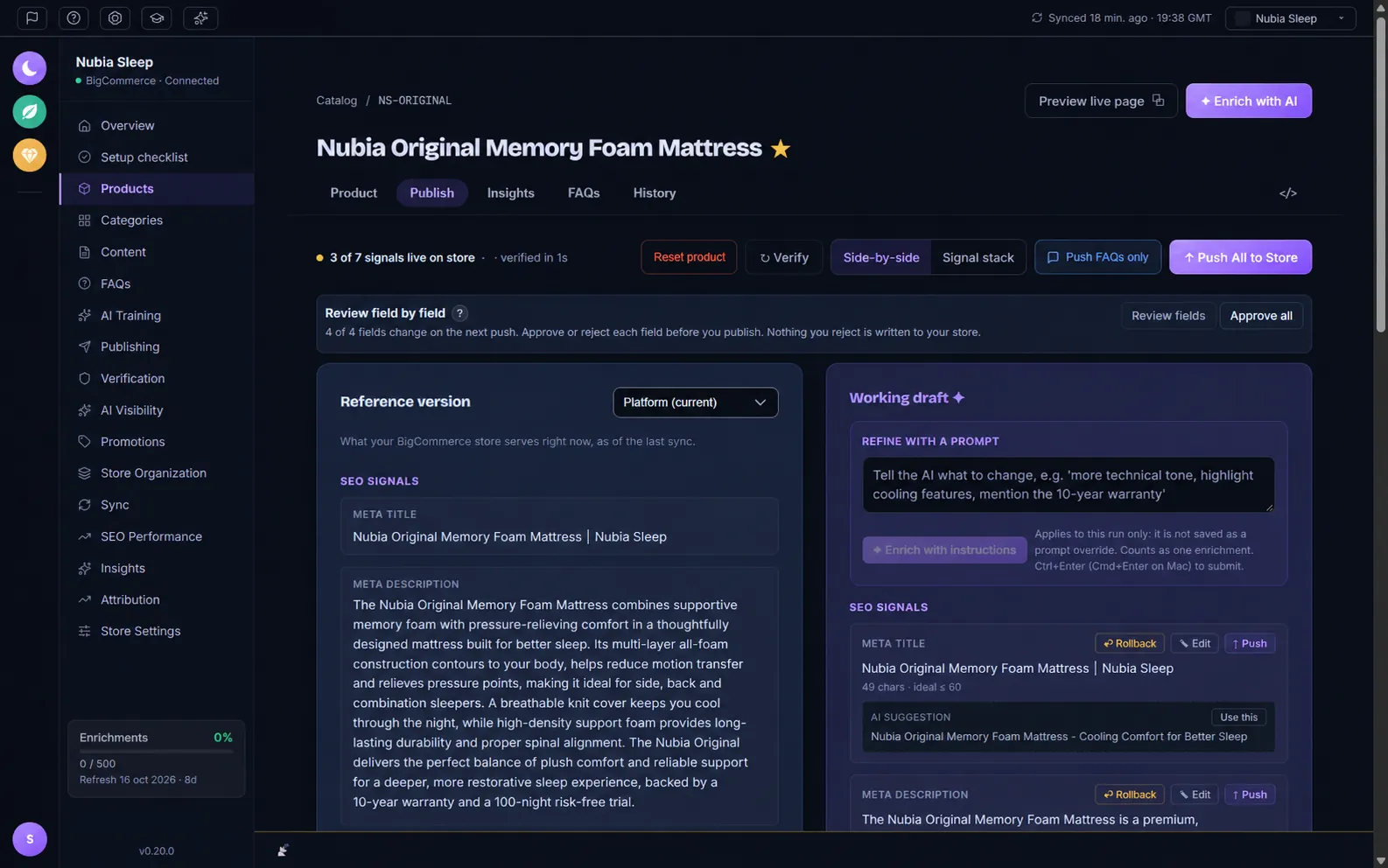
One click drafts the description an assistant needs: who it's for, how people choose it, the objection to answer. For one product, a batch or the whole catalog.
Clione gives you all the tools you need to bridge the gap between your ecommerce and what the artificial intelligence demands from it. All in your brand voice, accurately, and without a line of code.
AI search asks the same of every catalog: say what each product is, who it's for and why, in a form a machine can read. Here's what usually stands in the way, and what Clione does about it.
One click drafts the description an assistant needs: who it's for, how people choose it, the objection to answer. For one product, a batch or the whole catalog.
Answer what the photo can't say and skip what you don't know. Every draft is written from it, in your brand's voice.
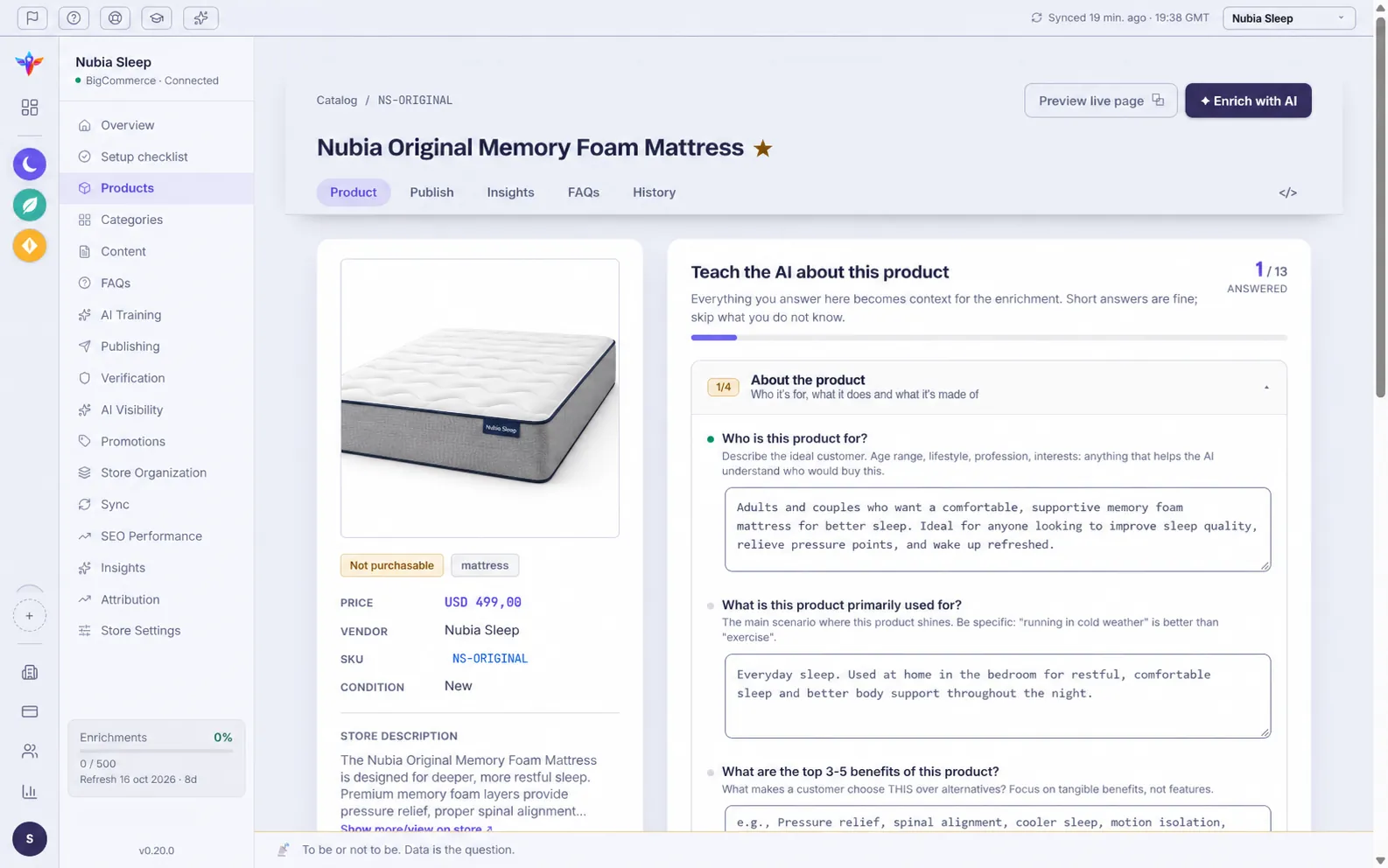
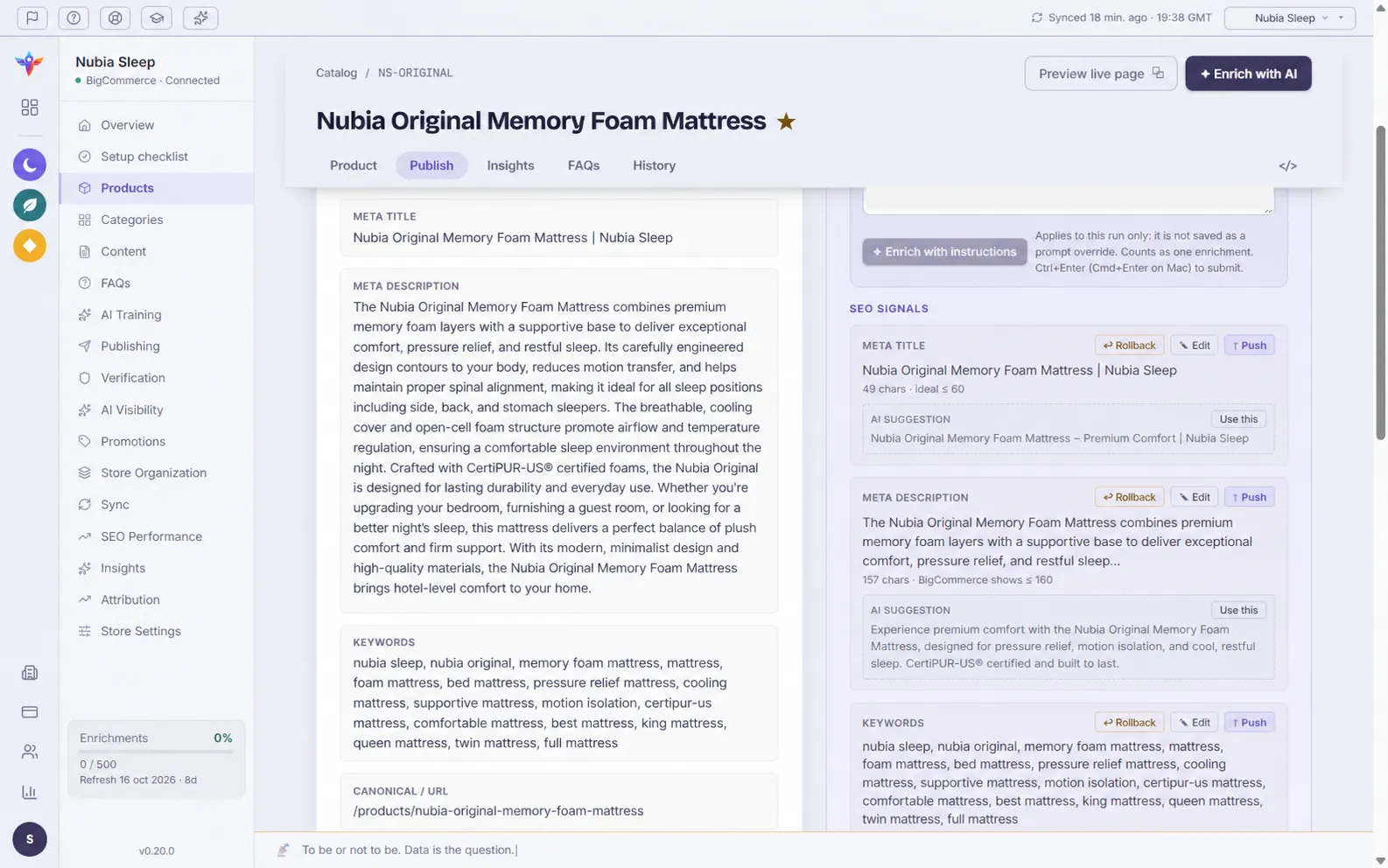
Every draft sits beside what your store shows today. Change a line in plain words, then push one signal or all of them.
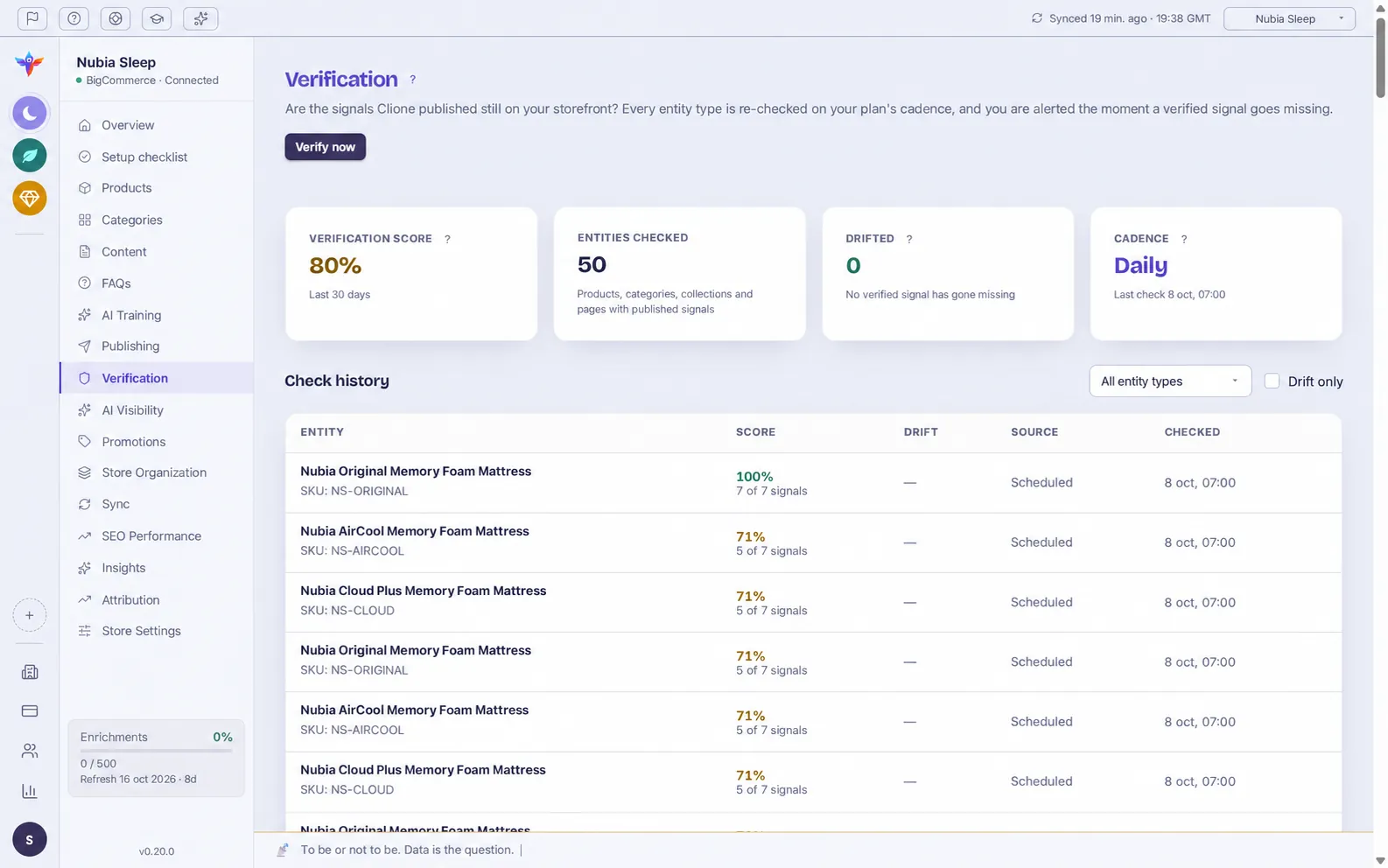
After each push Clione reads the page back, marks every signal that rendered, and tells you when one goes missing later.
Already working on the catalogs of
Who each product is for, how people choose it and what to answer, with a meta description and search keywords.
How it writes →The JSON-LD that tells search engines and assistants what the product is, who makes it and what it costs.
See the graph →Questions generated or imported for every product, shown on the page and published as structured data.
How it handles FAQs →What your store actually serves after each push, signal by signal.
What it checks →Two app embeds put everything on the page, switched on from the dashboard.
On Shopify →Published through the platform's own Widget API, in the HTML the store sends.
On BigCommerce →Clione asks ChatGPT and Gemini what your shoppers ask, and shows whether they name your products, and who takes your place when they don't.
How it checks →Paste the SFTP account OpenAI gives you and Clione sends a fresh feed of your enriched catalog every day. Google Merchant Center gets color, material, size and more.
How the feeds work →Connect Google Analytics and see which orders came from AI assistants, with the range that tells you when a difference is only noise.
How it's measured →Ask about your products in your own words and get the answer from your catalog. The assistant only reads; nothing in your store changes.
What you can ask →Stuck on a step? Help answers from the documentation and shows its source. When the docs run out, it opens a case with your conversation already in it.
Through an MCP server, the AI assistant you already use will read your catalog and send answers and enrichments straight into Clione.
Real figures
BenroUSA · June 2026
more impressions on the BenroUSA product pages Clione optimized with enriched content and FAQs. The whole site grew 8% in the same period.
Mostly no. Clione writes what search engines and assistants read: the meta title and description, the search keywords and the structured data behind each page. Your product descriptions stay as you wrote them. The one visible addition is an FAQ on the product page, and only if you switch it on.
No. You connect the store, sync the catalog and switch the storefront embed on from the dashboard. A setup checklist walks you through each step and checks that it worked.
Your catalog and your content pages and, to show which sales came from AI assistants, your recent orders: what was bought, when and for how much. Never who bought it. No name, email or address enters the system, and the data is stored in the EU.
Yes. The last three versions of every product are kept. Restore one inside Clione and push it, and the storefront goes back to that version. The restore is saved as a version too.
The next sync flags the product with the date and the exact fields that changed. Pushing again is your decision.
Nothing, during the beta. Clione is taking selected stores into this stage, in limited places, free of charge, and prices are published when the beta ends in Q1 2027. A free trial also exists: it connects your store, syncs it and enriches within its limits, and pushes nothing to the storefront.
On a short call we open one product from your store: what it serves today, and what Clione would publish.