The whole catalog, not the top ten.
Sync pulls every product, category and page in minutes. Enrich one, a batch or the whole store in one action, and push it all with one button.
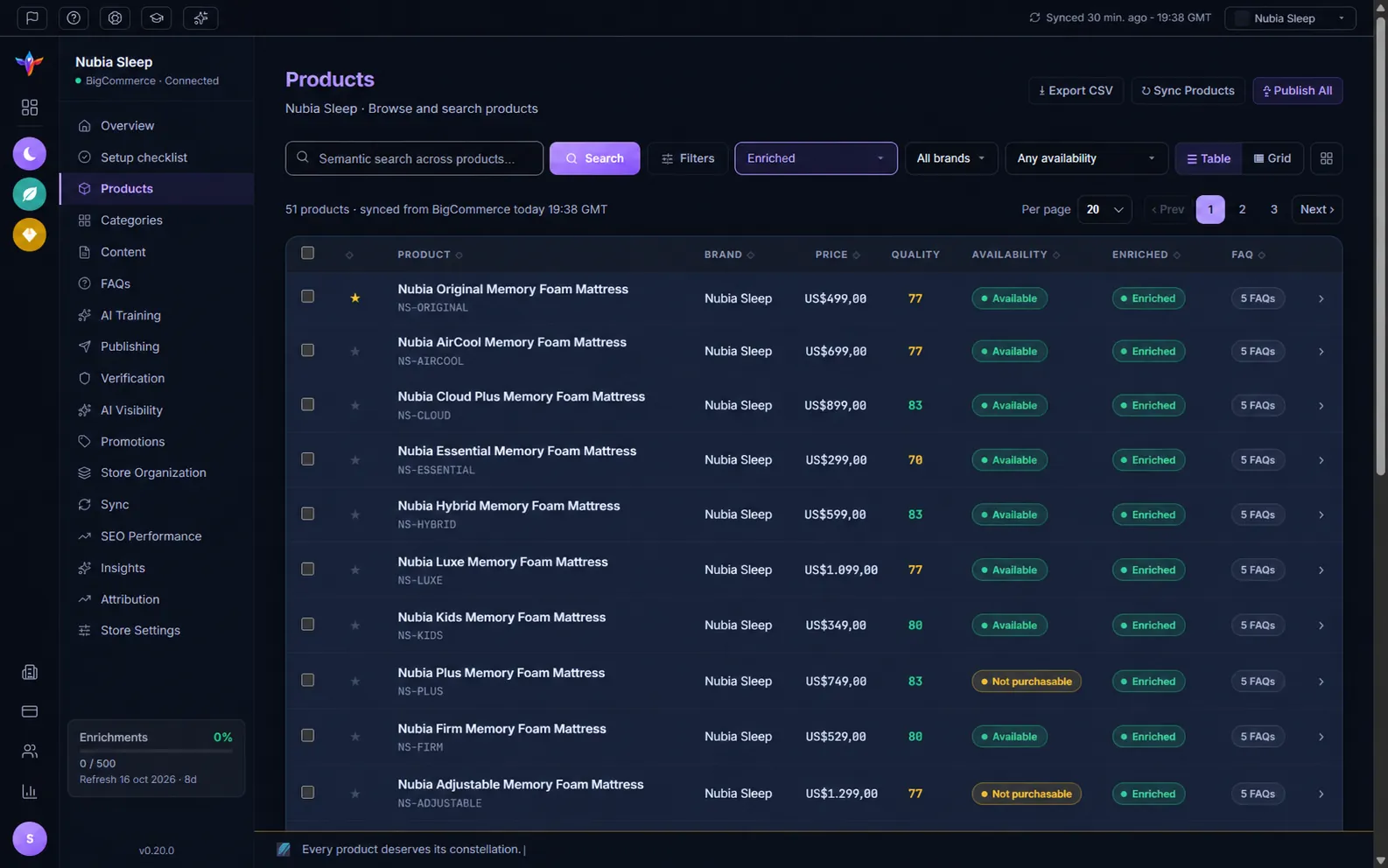
Clione does the SEO, AEO and GEO work your clients keep asking for, on every product, category and page they sell. In each client's own voice, with your logo on the report, and without waiting on a developer.
Selling GEO to an ecommerce client means doing it for every product they sell. Here's what usually makes that impossible for an agency, and what Clione does about it.
Sync pulls every product, category and page in minutes. Enrich one, a batch or the whole store in one action, and push it all with one button.
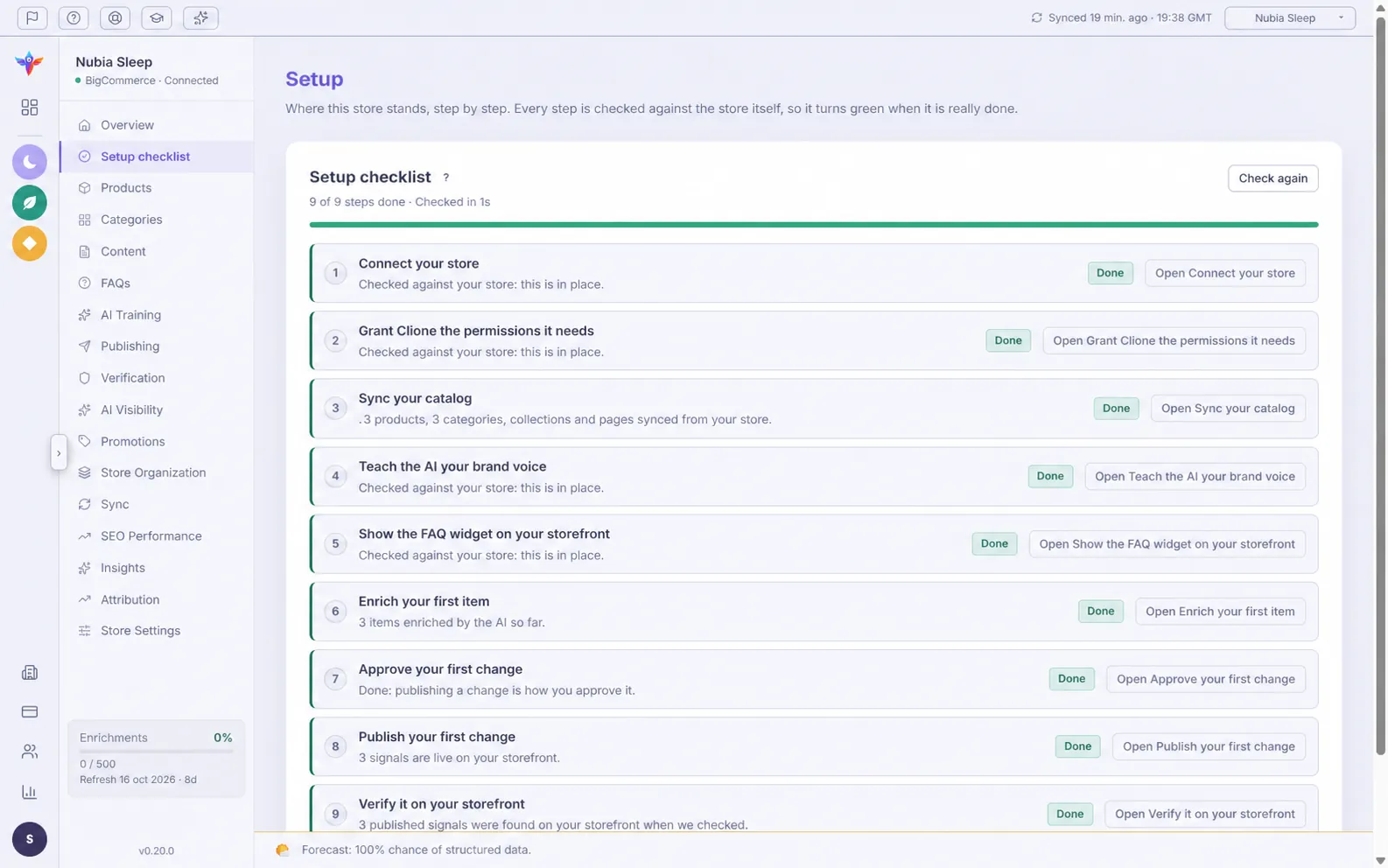
Load a client's voice sheet and brand documents once. Every draft for that store is written from them, and never uses the words they banned.
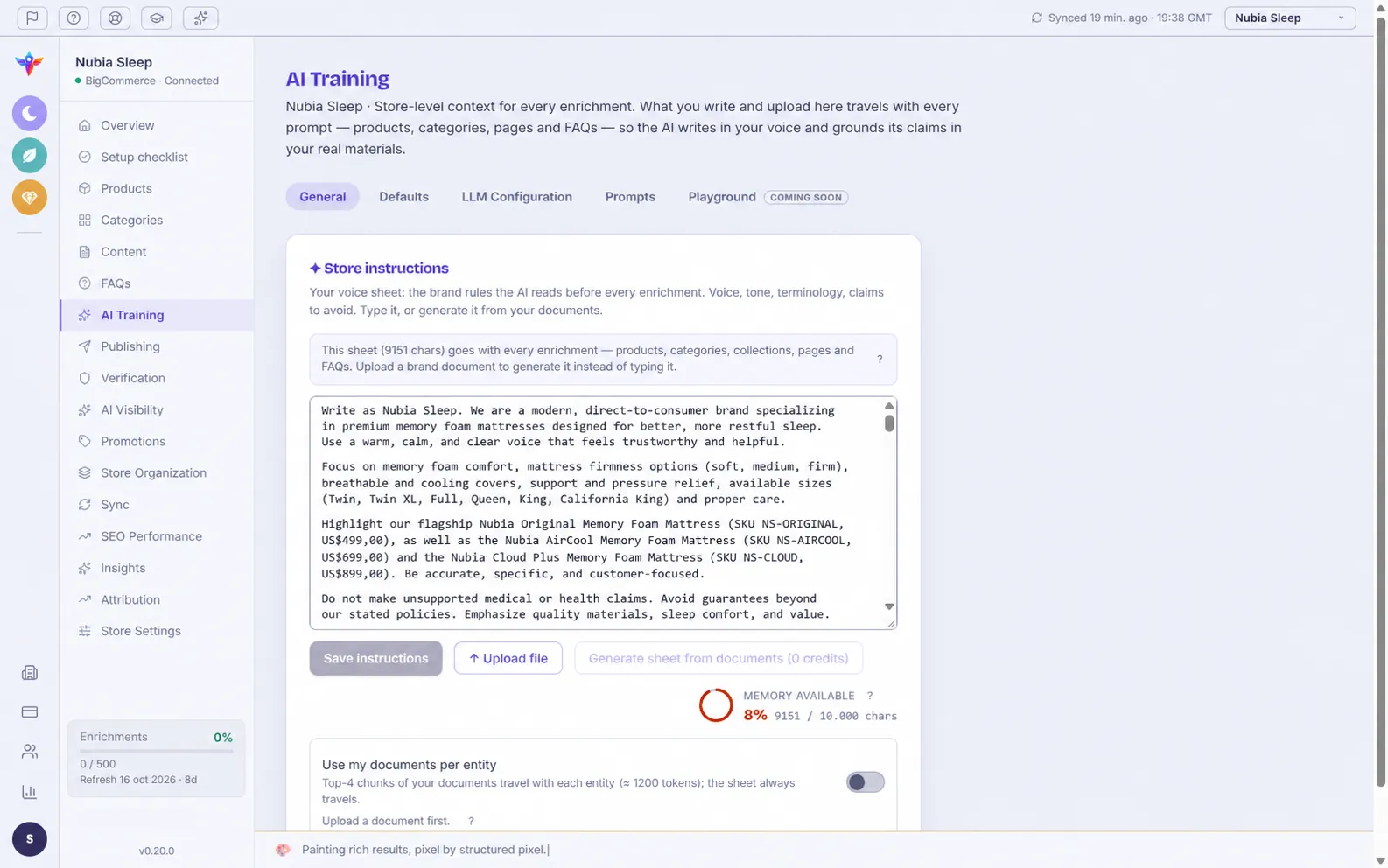
Connect the store, sync it and switch the storefront embed on from the dashboard. A seven-step checklist checks that each step worked.
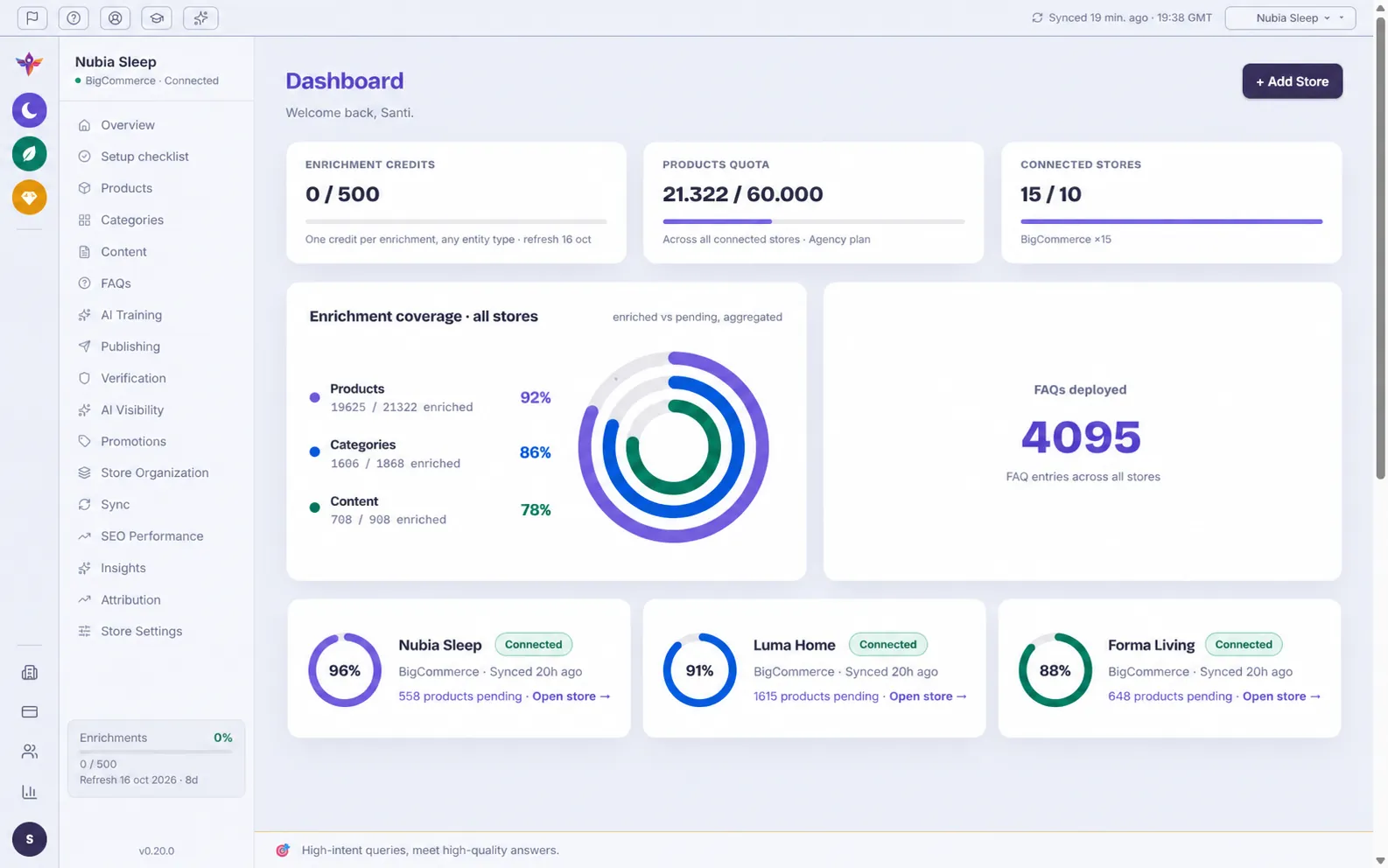
One organization holds the whole book: a card per store, and a Client performance table that sets coverage, Pulse score and AI mentions side by side.
Already working on the catalogs of
Who each product is for, how people choose it and what to answer, with a meta description and search keywords, across the whole catalog.
How it writes →The JSON-LD that tells search engines and assistants what the product is, who makes it and what it costs.
See the graph →Generated or imported, deduplicated, shown on the page and published as structured data.
How it handles FAQs →Whether ChatGPT and Gemini recommend your client's products, and who takes their place when they don't.
How it checks →Clione sends the enriched catalog to ChatGPT shopping every day, and a supplemental feed to Google Merchant Center.
How the feeds work →Which orders came from AI assistants, with the range that tells you when a difference is only noise.
How it's measured →A report over one store or the whole book, for any date range, in your organization's logo and colours. Share it by private link or embed it in your own pages.
Run the enrichment on OpenAI, Anthropic, Gemini or Ollama with your own API key, for the whole agency or per client.
Owners, admins and members per organization, sign-in with a second factor, and nothing reaches a client's store until someone presses Push.
Ask about a client's products in plain words and get the answer from that store's catalog. The assistant only reads; nothing changes.
What you can ask →Our team can run a controlled experiment on a client's own products: change the page, the feed or both, and compare AI mentions against a group left untouched.
How it's measured →Through an MCP server, the AI assistant your team already uses will read a client's catalog and push answers and enrichments straight into Clione.
Real figures
BenroUSA · June 2026
product pages of BenroUSA enriched with Clione by one agency, between 11 and 16 June 2026. The nine that also got FAQs grew impressions 25% while the whole site grew 8%.
Yes. One organization holds as many stores as your book, each with its own quotas and its own figures. The dashboard shows a card per store and a Client performance table you can sort by coverage, Pulse score or AI mentions.
Yes. Every store has its own voice sheet, brand documents, defaults and banned keywords, and they travel with every draft written for that store. Nothing one client taught Clione leaks into another's.
No. On Shopify two app embeds are switched on from the dashboard; on BigCommerce the signals go out through the platform's own Widget API. A setup checklist walks each store through and checks every step.
Yes. Every draft sits beside what the store shows today, and nothing is published until someone presses Push. After each push Clione reads the live page back and marks every signal that rendered, which is the proof you send the client.
Yes. OpenAI, Anthropic, Gemini or Ollama, with your own API key, set for the agency, per organization or per store.
Nothing, during the beta. Clione is taking selected agencies and stores into this stage, in limited places, free of charge, and prices are published when the beta ends in Q1 2027.
On a short call we open a product from one of your clients' stores: what it serves today, and what Clione would publish.